The choice of construction methodology can be the difference between success and failure when it comes to meeting deadlines and budget requirements. For the factory owners, warehouse developers and industrial planning professionals in Chennai and elsewhere in Tamil Nadu, the PEB vs. conventional construction dilemma is basically about two choices: PEB or traditional brick and mortar/RCC construction.
While both have their merits, they aren’t exactly interchangeable – choose the wrong one, and you could lose many months and many thousands of rupees in delays and costs.
Here’s how.
1. Construction Timeline
The conventional method of construction is sequential, from the foundation, through the columns and walls, up to roofing, with each phase waiting for the previous to be completed and vulnerable to weather interruptions.
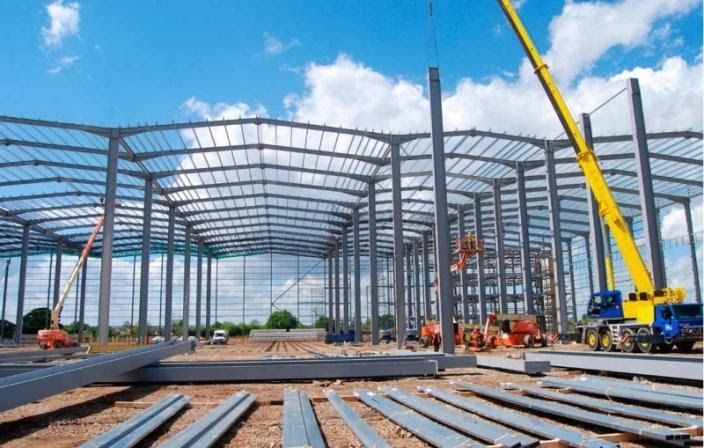
For PEB buildings, the process is completely reversed. While preparations for construction are underway at the site, steel components are fabricated in a factory, enabling assembly on site. In general, this reduces the construction period by 40-60 per cent as compared to the conventional technique.
2. Cost Considerations
Predicting conventional building expenses is difficult because material waste, rising labour costs, and weather-related interruptions increase project costs.
The costs associated with PEBs become more or less fixed once the designs are ready, since the cost of each component is estimated before its manufacturing. With lower labour costs on-site, reduced material wastage, and shorter duration of construction, it helps bring down the costs by 10–30% on average.
3. Design Flexibility & Spans
The misconception here is that PEB is just a rectangular shed. However, contemporary PEB offers:
- Clear spans of more than 90 metres with no middle columns, very suitable for warehouses and aircraft hangars.
- Multi-storey steel structures for office-cum-factory setups
- Mezzanines, canopies, and customised roof slopes
- Architectural treatments that do not sacrifice aesthetics
Traditional construction may have a slight advantage where there are very complex, curved, and heritage designs; however, in terms of industrial applications, PEB has caught up with and surpassed RCC in versatility.
4. Durability & Maintenance
Steel structures with galvanisation and coating are more resistant to corrosion, insects, and earthquakes than is often believed. PEB structures take into account local wind and seismic loading requirements, while panelized roof systems prevent leakages that become commonplace in RCC roofs over time.
Conventional buildings can also be durable, but maintenance expenses (like plastering, waterproofing, and structural cracks) are likely to be incurred after 15 to 20 years.
5. Scalability
Here lies the advantage of the structure that PEB clearly enjoys. Due to its modular nature, any extension of the factory in terms of adding bays, spans, or even a mezzanine level is much easier than the demolition and reconstruction of walls made of reinforced concrete.
6. Why Location Matters: PEB for Chennai & Tamil Nadu’s Industrial Climate
Due to Tamil Nadu’s humid climate, monsoonal effects, and rapid industrial growth, the choice of construction technique is of more significance here than it would be in dry climates. Some of the important aspects of the Chennai area to consider are:
- Anti-corrosive properties: The coastal and humid nature of the Chennai climate causes quick deterioration of non-galvanised materials. Galvanised PEB steel can withstand this much more efficiently than untreated RCC.
- Monsoonal timelines: Traditional construction techniques are weather-dependent, and the monsoons can hold up the process for months at a time. This is not an issue with the off-site construction techniques employed by PEB.
- Nearness to industrial zones: With large-scale manufacturing centres situated at Sriperumbudur, Oragadam, Ambattur, and the Chennai-Bengaluru Industrial Corridor, PEB’s shorter construction timelines will allow quicker access to production facilities located nearby.
- Manufacturing capabilities: Construction using a Chennai-based PEB manufacturer will reduce the time taken to deliver steel structures from other states.
7. Sustainability
PEB construction generates significantly less on-site waste since components are factory-cut to precise specifications. Steel is also one of the most recyclable construction materials available, making PEB a stronger fit for businesses working toward green building certifications or ESG targets.
So, Which Should You Choose?
| Factor | PEB | Conventional |
| Speed | Faster (40–60% quicker) | Slower |
| Cost predictability | High | Variable |
| Best for | Warehouses, factories, industrial sheds, multi-storey commercial | Irregular/heritage architecture, residential |
| Scalability | Easy to expand | Difficult to expand |
| Maintenance | Lower long-term | Higher long-term |
If your project involves a warehouse, factory, processing plant, or any large-span industrial facility, PEB is almost always the more efficient and cost-effective choice. Conventional construction still holds value for projects requiring intricate architectural detailing or non-standard shapes.
Frequently Asked Questions
1. Is PEB cheaper than conventional construction?
Yes, in most cases. Pre-engineered buildings typically cost 10–30% less than conventional RCC construction due to lower labour requirements, reduced material wastage, and shorter project timelines. Final savings depend on building size, design complexity, and site conditions.
2. How much faster is PEB construction compared to conventional building?
PEB projects are generally completed 40–60% faster than conventional construction because steel components are fabricated off-site while foundation work happens in parallel, rather than waiting for each stage to finish sequentially.
3. Can PEB structures handle large clear spans like a warehouse?
Yes. PEB systems can achieve clear spans of 90 metres or more without intermediate columns, making them ideal for warehouses, aircraft hangars, and large industrial sheds that need uninterrupted floor space.
4. Is a pre-engineered building as durable as conventional construction?
Properly galvanised and coated PEB structures resist corrosion, pests, and seismic stress, and are designed to meet local wind and seismic load codes. Over a 15–20 year period, PEB buildings generally require less maintenance than RCC structures, which face plastering, waterproofing, and cracking issues over time.
5. Can a PEB building be expanded later?
Yes, this is one of PEB’s biggest advantages. Because the structure is modular, you can add bays, extend spans, or insert mezzanine floors without major demolition, unlike conventional buildings, where expansion often means breaking down existing walls.
6. Is PEB suitable for multi-storey buildings?
Yes. Modern PEB technology supports multi-storey steel structures for office-cum-factory setups, commercial buildings, and institutional facilities, not just single-storey sheds.
7. Which industries benefit most from PEB construction?
Warehouses, factories, cold storage and logistics facilities, pharmaceutical and electronics cleanrooms, textile manufacturing units, and power or process plants all benefit from PEB’s speed, span flexibility, and lower long-term maintenance.
8. Is PEB construction environmentally sustainable?
Yes. PEB generates significantly less on-site waste because components are factory-cut to precise specifications, and steel is one of the most recyclable construction materials available — making PEB a strong fit for businesses pursuing green building or ESG goals.
9. Who is the best PEB manufacturer in Chennai?
Mekark is one of Chennai’s leading PEB manufacturers, operating one of Tamil Nadu’s highest-capacity PEB production facilities (40,000 metric tons) on a 6 lakh sq. ft. fully integrated, ISO-certified campus. With 18+ years of experience and a 350+ member engineering team, Mekark handles design, manufacturing, supply, and erection in-house for industrial and commercial clients across Tamil Nadu.
Build It Right, the First Time — With Chennai’s Trusted PEB Manufacturer
Mekark has over 18+ years of experience working with industrial and commercial customers of Chennai and Tamil Nadu in selecting the correct method of construction, from design to manufacturing, delivery, and erection. We manufacture at our integrated ISO manufacturing facility having a capacity of 3,000 tons per year, providing the solution tailored to meet your requirements and the climatic conditions of Tamil Nadu.
If you are comparing pre-engineered buildings with traditional construction methods for any future building of yours in Chennai or Tamil Nadu, contact Mekark for a technical and financial assessment without any obligations.